A nice thing about a day of music around climate change: there's plenty of opinions around, the topic seems to be paramount (I'll look forward to the evening news...). N24 interviewed a climate change expert from Potsdam.
Why watch telly-on-the-wee-screen when it's on TV, dummy? Apart from that I anyway had to soft-fiddle for half an hour to NOT getting sound out of the machine (I normally use iTunes but that doesn't seem to work here, as the download is sponsored by Mr. Bill...).
After reading that google is just about to scan the entire Library of Congress, I just checked out the google search on books - not bad, even in German language: Weitere Google-Produkte
I attended a conference on Business and NGO partnerships last week. Good for readers of this blog that there was an off-the-record policy which blocked all WLAN and thus prevented me from live-blogging!
After there had been little uptake of our blog in 2006 (our own hits not counting...), we discontinued it for the time being. We hope to get it back on track this summer break, extending on readership and content through some viral stuff, CSR-chicks etc.
The way of how transnational corporations (TNCs) should or could behave in areas of conflict remains largely absent from the agendas of most companies and their stakeholders. Exceptions to this are only the most blatant and negative cases: corporate activities fuelling wars (e.g. "blood diamonds"); corporations generating large profits through personal allegiances (e.g. Kellog, Brown & Root in Iraq); or corporations establishing business leads to e.g. government contracts through corruption ("if we don't do it, our competitor will").
Foreign Direct Investment (FDI) remains a cornerstone of new international development commitments. But how effective is it, and how can donor countries maximise its benefits? A recent OECD-paper looks at the connections between aid, trade and investment policies.

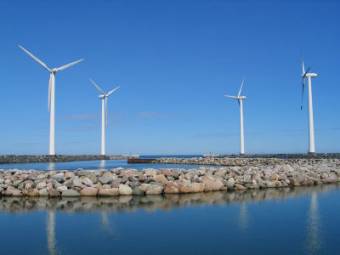 A nice thing about a day of music around climate change: there's plenty of opinions around, the topic seems to be paramount (I'll look forward to the evening news...). N24 interviewed a climate change expert from Potsdam.
 I attended a conference on
  After there had been little uptake of our blog in 2006 (our own hits not counting...), we discontinued it for the time being. We hope to get it back on track this summer break, extending on readership and content through some viral stuff, CSR-chicks etc.
 The
The  Foreign Direct Investment (FDI) remains a cornerstone of new international development commitments. But how effective is it, and how can donor countries maximise its benefits? A recent